
OEM Furniture Manufacturer in Malaysia: Buyer Brief
A useful factory enquiry starts with a defined product, a clear specification and a decision process for samples. Use this guide to prepare a brief and compare relevant Malaysian furniture profiles before contacting a factory.
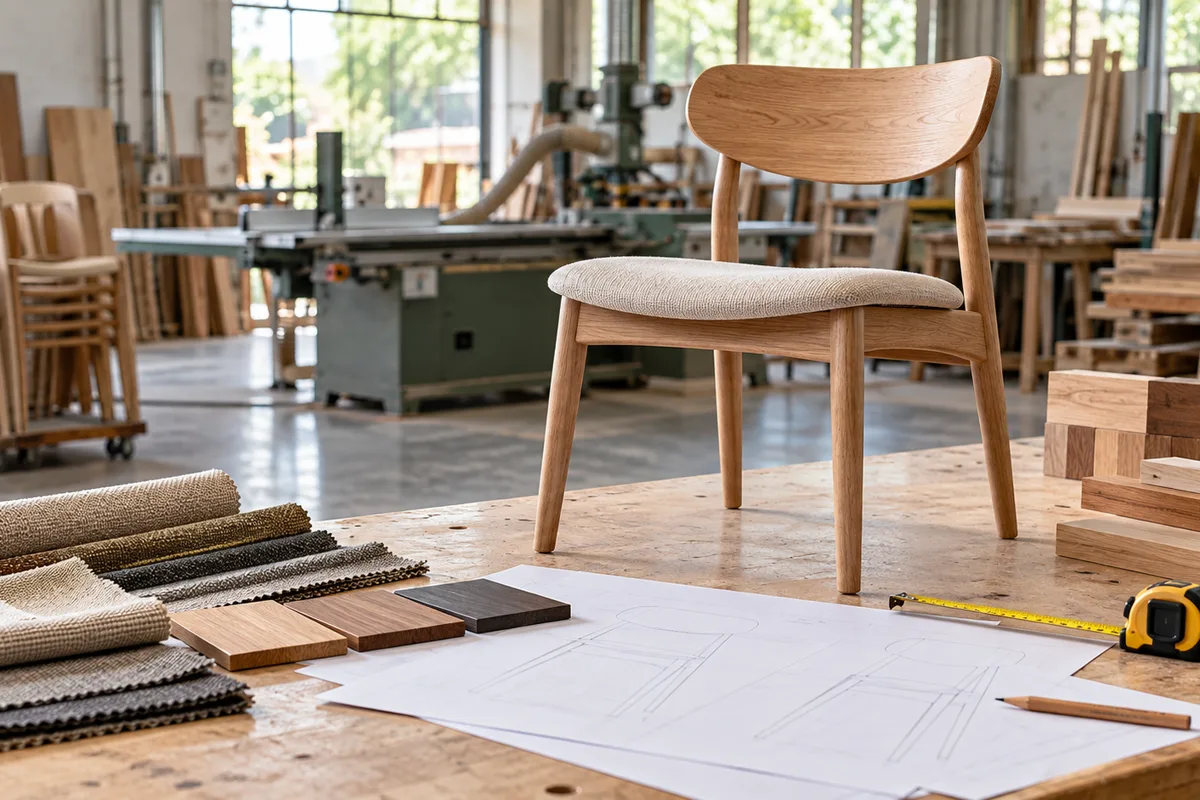
An OEM furniture manufacturer can assess a buyer's product specification only when the intended design, materials, target order and approval steps are clear. Start with a concise buyer brief, then shortlist factories whose published product ranges match the project; confirm the proposed service directly rather than treating an OEM label as a blanket promise.
This is a practical guide to the first enquiry, not a general ranking of Malaysian suppliers. For the broader work of checking a supplier's background and commercial fit, see FEM's reliable furniture suppliers checklist. Here the focus is narrower: making a particular furniture design understandable, comparable and ready for a meaningful factory conversation.
Send each suitable factory the same product brief and ask which elements it can actually make, sample and quote. Agree what will count as an approved sample before considering a production order.
1. What an OEM furniture manufacturer needs
Define the OEM project by separating the design you own or control from the decisions you want a manufacturer to make. A buyer might provide drawings and a material specification for manufacture, or ask a factory to develop an existing concept further. Those are different assignments; describe the expected design work and do not assume the same commercial or intellectual-property terms apply.
Tell the factory whether the request is for a new product, a variation of an existing design or a private-range concept. Specify the furniture category first: an upholstered sofa, a dining chair, a bedroom case good and an office item demand different materials and production processes. A supplier profile showing OEM/ODM support is a starting signal, not evidence that every category, finish or proposed order is feasible.
Also distinguish the sample you need. A visual mock-up might answer questions about silhouette, while a physical sample may be needed to assess comfort, finish, assembly and packaging. Ask the factory what it can produce for the proposed item, what information it needs to price that work and what remains subject to its review. If your design or brand has usage restrictions, put those requirements in the enquiry rather than assuming they are standard.
2. Write a brief a factory can assess
A workable brief gives each shortlisted factory the same decision-ready inputs. Describe the product and its intended buyer, attach the drawings or clear reference images you are authorised to share, then mark which details are fixed and which are open to factory suggestions. If you have no technical drawing yet, say so and ask what development support the supplier can offer before requesting a production price.
Use a revision number on every specification and sample note. That makes it easier to compare replies and reduces the risk of approving one finish while a quotation refers to another. For a collection, identify which details are shared across models and which must be quoted separately. Do not send a broad catalogue wish-list and expect a single meaningful unit price.
| Brief element | What to send or ask | Why the answer matters |
|---|---|---|
| Product and dimensions | Model drawings, dimensions, assembly method and intended use. | Shows whether the factory's product range and process fit. |
| Materials and finish | Wood or panel grade if specified, fabric or leather choice, colour, hardware and acceptable alternatives. | Separates exact-specification pricing from substitutes. |
| Order scenario | Expected model count, indicative quantity per model and proposed repeat-order pattern. | Lets the factory assess feasibility and its own MOQ. |
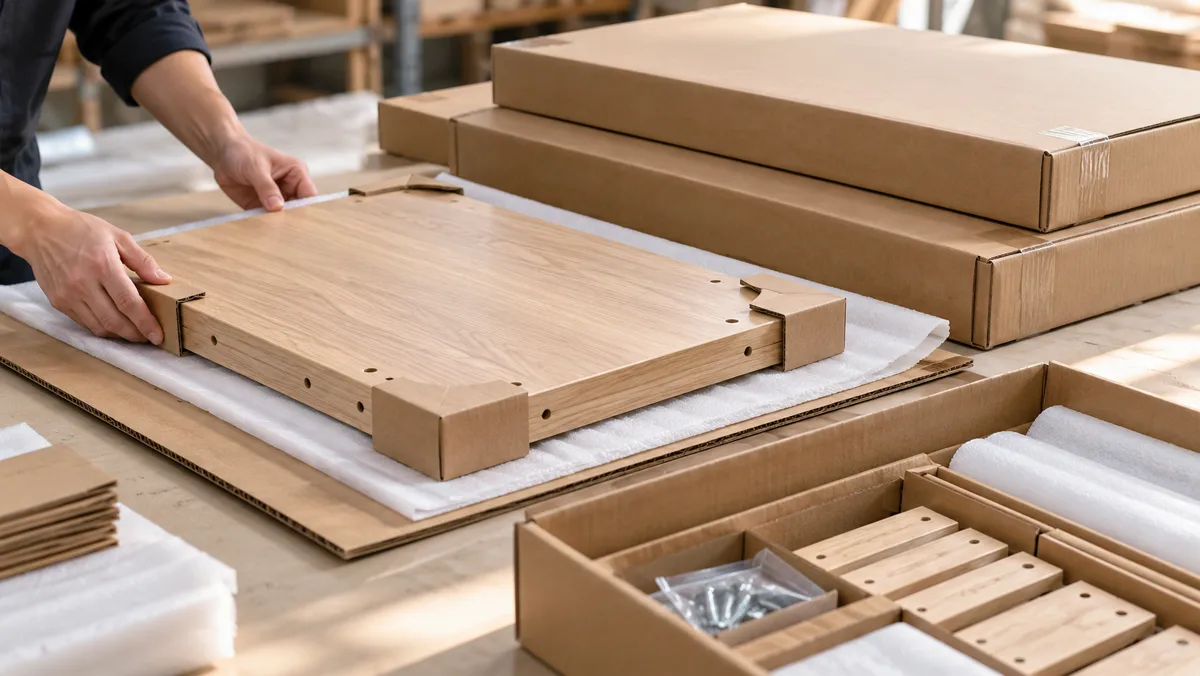
| Sample and packaging | Required sample type, approval criteria, pack format and destination-market requirements to discuss. | Surfaces development and packing decisions before an order. |
| Commercial basis | Request itemised sample, tooling if applicable, product and packing costs, plus the quoted trade term. | Makes competing offers easier to compare without assuming identical scope. |
Where a retailer or importer needs its own labelling, test evidence or packaging format, state that requirement explicitly and ask for documents or evidence relevant to the actual model. This guide does not determine product compliance for a destination market. Confirm any required tests or declarations with the appropriate qualified adviser or authority before placing an order.
3. Plan sampling and approval
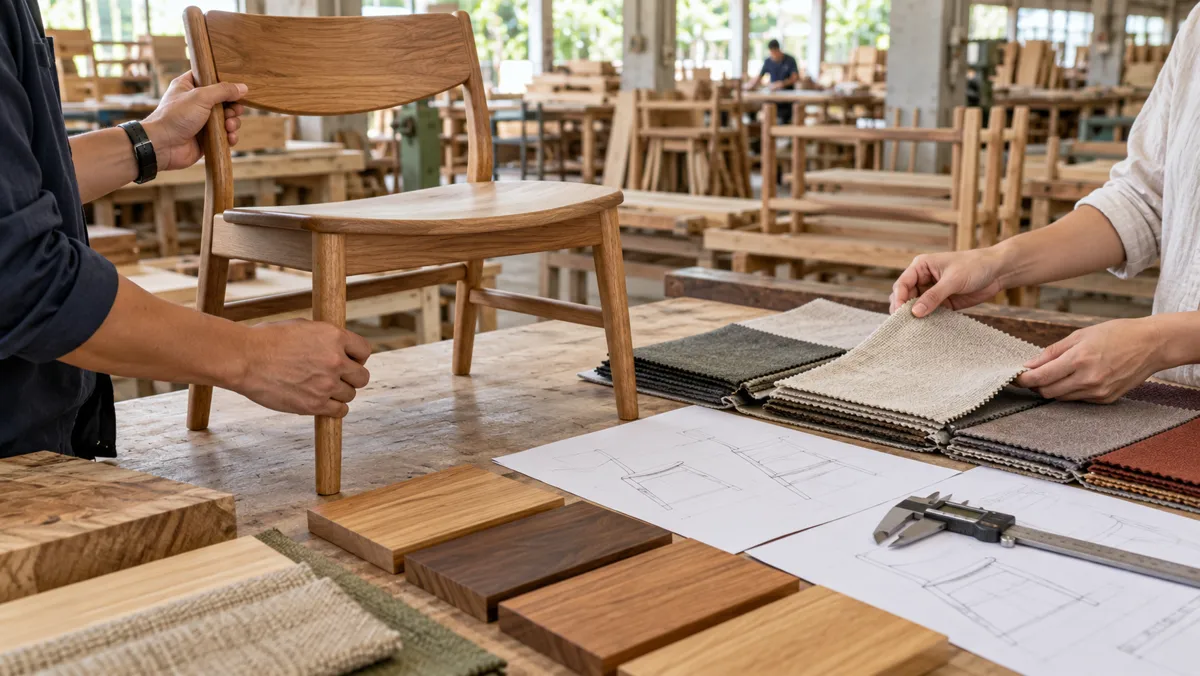
Plan sampling as a series of documented decisions, not just a request to “send a prototype”. Ask the supplier which drawing or specification revision it will use, what the sample includes and how proposed substitutions will be flagged. Agree whether the review concerns appearance only or also fit, comfort, assembly, materials, finish and packing. The answers should be specific to the model and factory.
Keep an approval record: dated photographs, the sample identifier, material and finish references, the list of corrections and the person who accepts each change. If a first sample is not representative of the intended production construction, ask what will be different in the next version. Buyers should not treat a photograph of a display model as approval of every component in a new OEM product.
Before moving from sample to a purchase order, ask how the approved version will be identified during production. Confirm whether any changes in materials, dimensions or packing require fresh buyer sign-off. A factory may have its own approval procedure; the useful question is how that procedure connects the agreed sample to the exact item being ordered.
Approve the revision, not a vague concept.
A simple version-controlled specification and change log make later quotation and production discussions much clearer.
4. Compare quotations on the same basis
Compare quotations only after checking that each one describes the same product, quantity, materials, packing and delivery scope. A lower unit figure may reflect a different material, a larger order, omitted development work or a different trade term. Ask the factory to state the assumptions behind its price before deciding whether one offer is more suitable than another.
Separate one-off development or sample charges from repeat-order pricing. Request clarification on tooling ownership or design-file use if those questions matter to your programme; do not presume either is included. Ask for the supplier's actual MOQ and lead-time estimate for the proposed mix of models, rather than transferring figures from a general company profile to your project.
For overseas buyers, note the named trade term and the point at which the factory's responsibilities end. You can discuss packing and documentation at this stage without asserting a tariff, customs rate or automatic eligibility for a preference scheme. Destination requirements can vary by the actual product and route; verify them separately before committing to an import plan.
If replies are not comparable, send a short clarification table and ask each factory to complete the same fields. A precise follow-up often reveals which uncertainties belong to your brief and which require technical input from the manufacturer. That is more useful than forcing an early winner from unlike quotes.
5. Match the brief to factory profiles
Match the brief to a product category before contacting factories. These six VIP profile examples show different sourcing strengths and are examples, not a ranking. Their profiles describe OEM/ODM support as available upon request; that does not confirm acceptance of a particular design, quantity or delivery requirement. Read the live profiles and ask each company about your actual item.
Synergy Wood Products Sdn Bhd
Its profile lists dining, bedroom and living-room/occasional furniture. It describes an in-house research and development process that can work from customer concepts, drawings and product specifications through prototyping and preparation for manufacture.
The profile says OEM/ODM support is available upon request. A buyer with a wooden furniture concept can ask which drawings and material decisions Synergy would need before assessing the proposed model.
Potential buyer fit: A product brief for a dining or bedroom range that needs design-to-sample discussion.
Explore Synergy Wood ProductsNatural Signature Sdn Bhd
Its profile lists dining, bedroom and living-room/occasional furniture, and says OEM/ODM support is available upon request. The company's account of its production process describes material selection through final delivery.
For a wooden furniture collection, ask which finishes, construction details and sample stages are relevant to the exact models in your brief. The profile is evidence of category fit, not approval of a new specification.
Potential buyer fit: A coordinated home-furniture range where material and finish consistency require discussion.
Explore Natural SignatureWA Cushion Sdn Bhd
Its profile describes fabric and leather upholstered furniture including sofas, beds, daybeds, ottomans and benches. It lists customisation discussions around size, materials, finishes, upholstery, modular configurations and seating comfort.
The same profile states OEM/ODM support is available upon request. For a sofa programme, send the intended upholstery and comfort requirements so WA Cushion can say which variations it can assess and sample.
Potential buyer fit: An upholstered product needing a discussion about fabric, dimensions and functional details.
Explore WA CushionPoh Huat Furniture Industries (M) Sdn Bhd
Its profile describes panel-based and wood-based furniture production processes and lists OEM/ODM support as available upon request. It also distinguishes manufacturing operations by material and location; buyers should ask where their specific proposed product would be made.
When approaching Poh Huat, identify the product construction and finish first. Discuss the relevant facility and process for the item rather than assuming every furniture line follows the same manufacturing route.
Potential buyer fit: A panel-furniture or coordinated home-furniture brief with defined construction requirements.
Explore Poh HuatFurnizone Industries Sdn Bhd
Its profile describes knock-down particle-board furniture, including wardrobes, bedroom sets and cabinets. It lists custom design support for size, material, finish, colour and design, with OEM/ODM available upon request.
For a panel-furniture brief, ask which construction, finish and flat-pack details Furnizone can assess for the proposed model.
Potential buyer fit: A knock-down bedroom or storage range with model-specific customisation questions.
Explore FurnizoneT.H.L. Sofa Sdn Bhd
Its profile describes a leather-sofa specialisation and highlights recliner, incliner and contemporary sofas. It says modifications based on existing configurations are available; new model development requires prior discussion and agreement.
OEM/ODM is listed as available upon request, not as an automatic promise to build a new design.
Potential buyer fit: A sofa brief that distinguishes modifications to an existing configuration from a new model.
Explore T.H.L. SofaThese profiles help narrow a wider Malaysian supplier directory, but each enquiry still needs a product-specific reply. Do not assume that an OEM/ODM badge alone confirms private labelling, destination-market approval, a fixed minimum order or a promised delivery date.
6. Ask capability and production questions
Ask questions that turn general capability into an answer about your item. Can the factory work from the submitted drawings, or does it need a prototype, a bill of materials or different technical files? Which parts are made through its own process, and which proposed materials or fittings need further confirmation? These questions are more useful than a broad request for a catalogue.
Ask what must be settled before a sample can be priced: dimensions, substrate, finish, upholstery, hardware, packaging and assembly instructions. For an upholstered product, discuss the relevant seat construction and fabric choice; for panel furniture, clarify finish, edge details and assembly. Avoid implying that one factory's listed capability covers a category it has not shown in its profile.
Also ask how the supplier records changes after sample approval and how the buyer will review a change. A clear route for sign-off matters if materials or components become unavailable. Ask what evidence the factory can provide about the particular product or requested test, but do not substitute a general company certificate for product-specific evidence.
7. Send a focused first enquiry
Send a focused first enquiry that allows a suitable factory to accept, decline or ask for clarification. Identify your business type, destination market and the proposed product family. Attach a versioned brief, then list the few decisions you need at this stage rather than demanding a final quote for an unfinished design.
A useful opening could say: “We are sourcing a dining-chair range for our retail programme. Please review the attached drawings and finish schedule, confirm whether this category and proposed construction fit your process, and tell us which details you need to assess sampling and indicative order terms.” Replace the example category with your real product and avoid disclosing confidential files without the controls your business requires.
In the same message, ask the factory to identify any suggested substitutions and clarify who will prepare the first sample specification. Request its project-specific MOQ, sample steps, indicative production timing and quote basis after it has reviewed the brief. Those terms should come from its reply, not from an unrelated example in a directory article.
Start with the relevant factory listings and open each supplier's profile to check the product range. Use the profile's own enquiry path for a targeted message. Retain a copy of the brief version sent to each company so their replies can be compared against the same request.
8. Decide what to verify before ordering
Decide what to verify before ordering by reviewing the item, supplier and commercial scope separately. A promising sample does not settle the quotation, and an attractive quotation does not establish that the approved sample matches the proposed production specification. Put the outstanding points in a short decision log with an owner and a due date on your side of the transaction.
Check the final drawing revision, agreed materials, sample approval record, quantities by model, packing approach and the named trade term. Ask the supplier which documents it expects to supply for your order and confirm destination requirements through an appropriate authority or specialist. This article deliberately does not give a blanket statement about duties, tariffs or product compliance.
If a supplier proposes a change, ask whether it affects the sample, unit price, order mix or timing. The answer may be different for each product in a collection. Keep the approved product and the commercial offer tied to the same revision so the buyer and factory are discussing one defined item.
A clear brief improves the next conversation.
The purpose is not to collect the most quotes. It is to learn which factory can discuss your specific product with the fewest unresolved assumptions.
9. Start with a usable specification
Start with a usable specification and a shortlist based on product fit. The factory profiles above show different categories and describe OEM/ODM support as available upon request, but only a direct discussion can establish whether your design, sample plan and proposed order are suitable. Use the same brief version for each enquiry and record the changes that follow.
If you are still comparing the broader supplier-selection process, read FEM's supplier evaluation checklist. If you already know the product category, browse the listings, review the relevant profiles and ask an exact question about the next sample or specification decision.
Ready to Discuss Your Furniture Brief?
Review category-matched supplier profiles, then send a defined product brief to factories whose published ranges fit the item you want to develop.
Explore Factory Listings